
A cream rectangular box with a dashed, hand-stitched–style border on a purple brush-stroke background. The text inside reads: “Question 4: Compared to disabled men or non-disabled women is it harder for disabled women, girls and non-binary/genderqueer/gender non-conforming people to earn money? What makes it more difficult for this group specifically?”
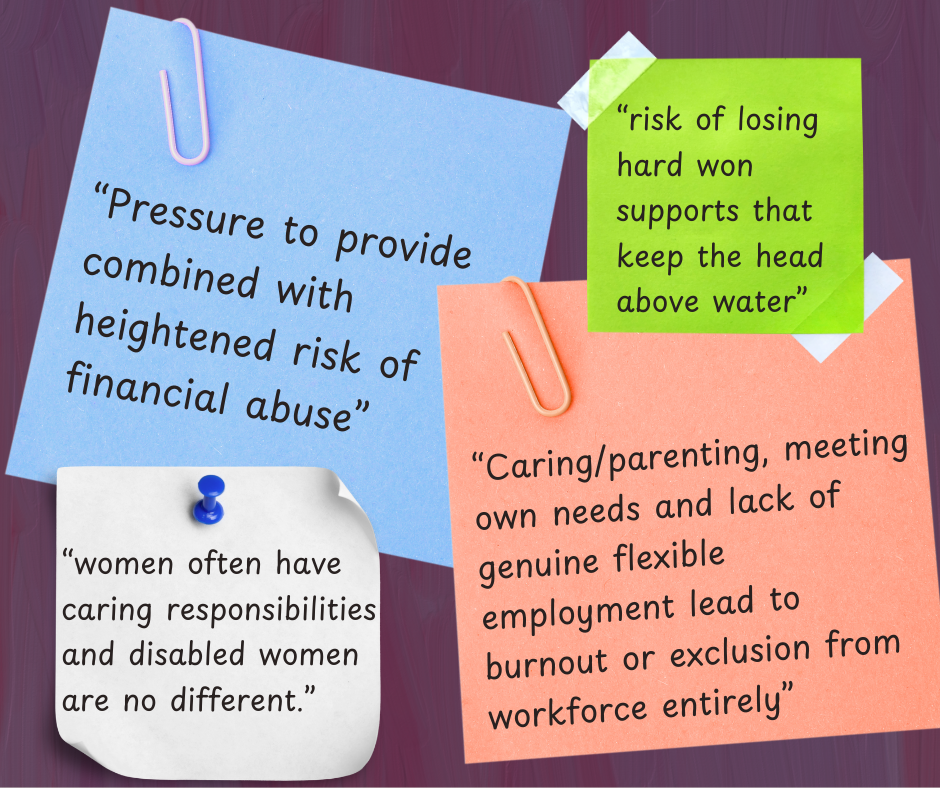
A graphic with purple brush-stroke background featuring four paper note graphics.
A blue rectangular note with a paperclip reads: “Pressure to provide combined with heightened risk of financial abuse.”
A bright green square note taped at the top reads: “risk of losing hard won supports that keep the head above water.”
A white curled paper note pinned with a blue pushpin reads: “women often have caring responsibilities and disabled women are no different.”
A peach note with an orange paperclip reads: “Caring/parenting, meeting own needs and lack of genuine flexible employment lead to burnout or exclusion from workforce entirely.”
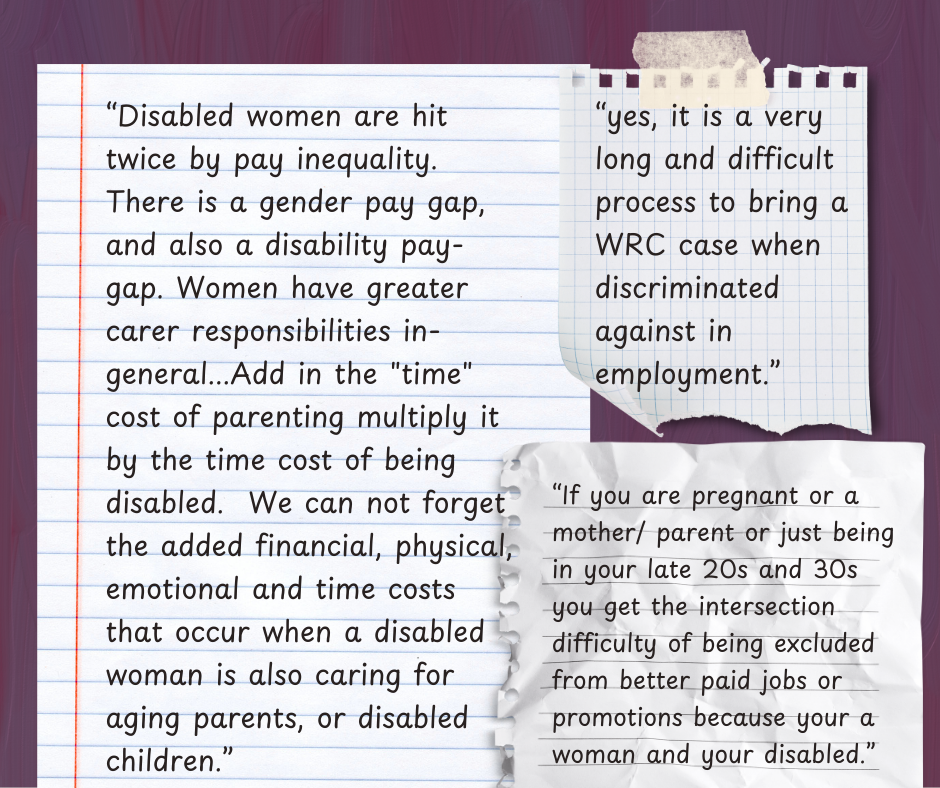
A graphic with a purple brush-stroke background. In the centre are three overlapping notes: lined notebook paper on the left, torn graph paper taped at the top on the right, and a crumpled white note at the bottom right.
The left lined page contains the quote: “Disabled women are hit twice by pay inequality. There is a gender pay gap, and also a disability pay-gap. Women have greater carer responsibilities in general… Add in the "time" cost of parenting multiply it by the time cost of being disabled. We cannot forget the added financial, physical, emotional and time costs that occur when a disabled woman is also caring for aging parents, or disabled children.”
The top right taped graph-paper note reads: “yes, it is a very long and difficult process to bring a WRC case when discriminated against in employment.”
The bottom right crumpled note reads: “If you are pregnant or a mother/parent or just being in your late 20s and 30s you get the intersection difficulty of being excluded from better paid jobs or promotions because you're a woman and your disabled.”]
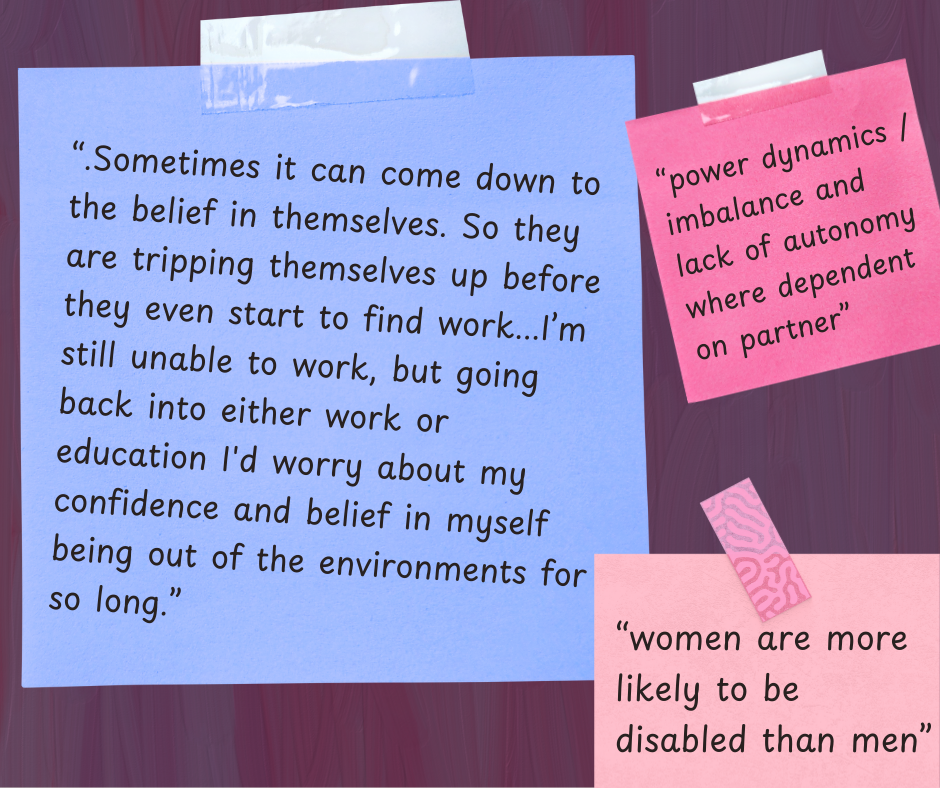
A graphic with a purple brush-stroke background. In the centre is a large blue sticky note with tape at the top, with two additional smaller notes
The large blue note contains the full quote: “Sometimes it can come down to the belief in themselves. So they are tripping themselves up before they even start to find work… I’m still unable to work, but going back into either work or education I’d worry about my confidence and belief in myself being out of the environments for so long.”
The pink note on the right reads: “power dynamics / imbalance and lack of autonomy where dependent on partner”
The peach note at the bottom right reads:“women are more likely to be disabled than men”
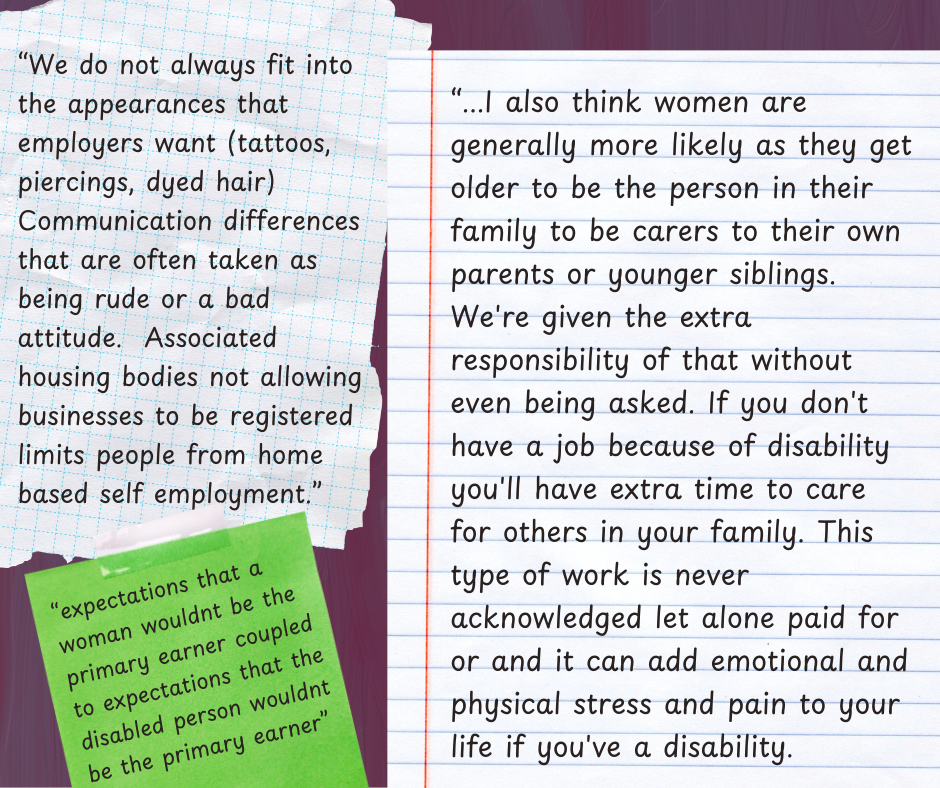
A graphic with a purple brush-stroke background. Multiple papers overlap: torn notebook paper on the left, lined paper on the right, and a green sticky note at the bottom.
The left torn notebook-style paper contains the quote: “We do not always fit into the appearances that employers want (tattoos, piercings, dyed hair). Communication differences that are often taken as being rude or a bad attitude. Associated housing bodies not allowing businesses to be registered limits people from home based self employment.”
The green sticky note reads: “expectations that a woman wouldn’t be the primary earner coupled to expectations that the disabled person wouldn’t be the primary earner”
The right lined notebook page contains the full quote:“…I also think women are generally more likely as they get older to be the person in their family to be carers to their own parents or younger siblings. We’re given the extra responsibility of that without even being asked. If you don’t have a job because of disability you’ll have extra time to care for others in your family. This type of work is never acknowledged let alone paid for and it can add emotional and physical stress and pain to your life if you’ve a disability.”