
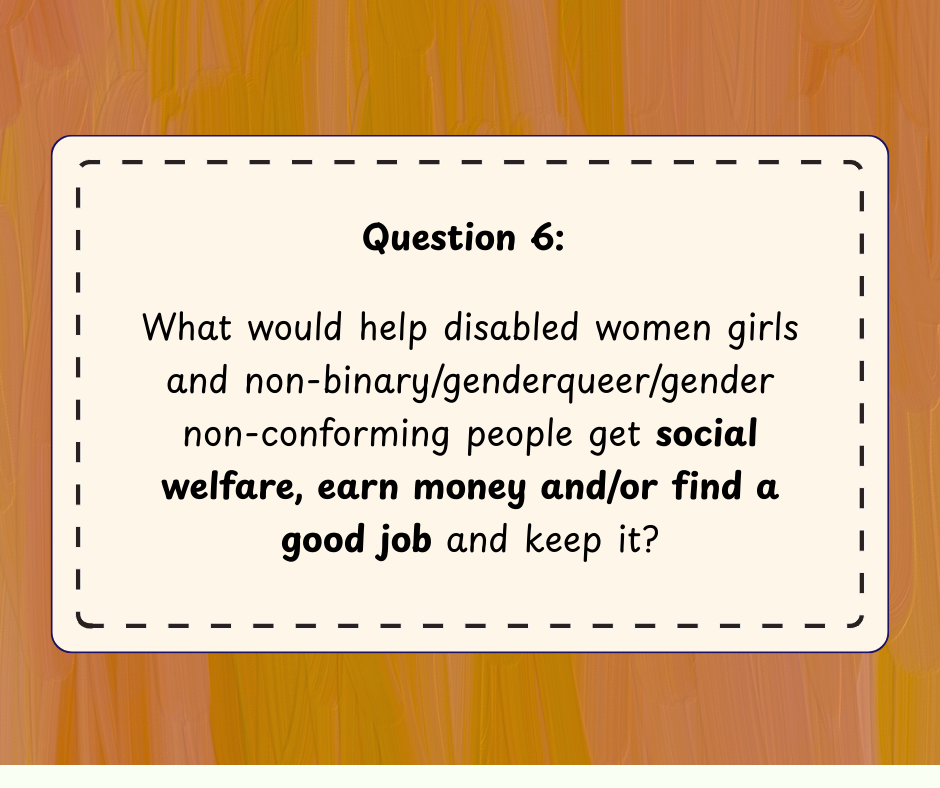
A graphic with a brush-stroke background in layered ochre, orange and brown tones. A large cream panel with a dashed, hand-stitched border sits centrally.
Text reads: “Question 6: What would help disabled women, girls and non-binary / genderqueer / gender non-conforming people get social welfare, earn money and/or find a good job and keep it?”
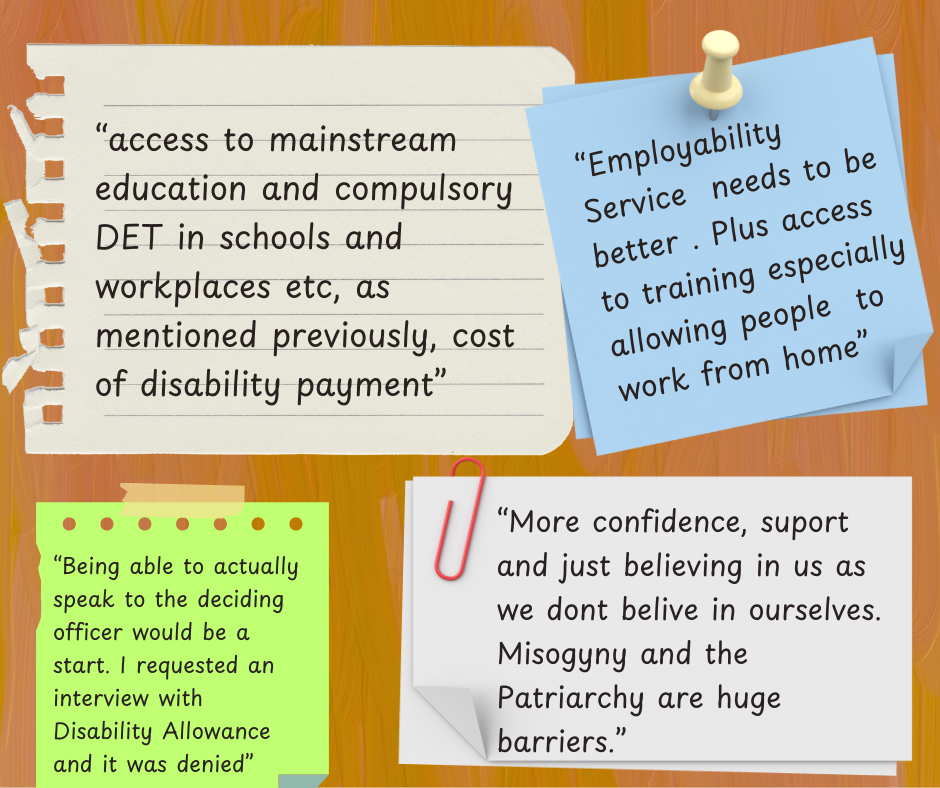
A graphic with a brush-stroke background in layered ochre, orange and brown tones. The design features overlapping paper-notes pinned and clipped in place.
Text reads:
“access to mainstream education and compulsory DET in schools and workplaces etc, as mentioned previously, cost of disability payment”
“Employability Service needs to be better. Plus access to training especially allowing people to work from home”
“Being able to actually speak to the deciding officer would be a start. I requested an interview with Disability Allowance and it was denied”
“More confidence, support and just believing in us as we dont believe in ourselves. Misogyny and the Patriarchy are huge barriers.”

A graphic with a brush-stroke background in layered ochre, orange and brown tones.
The design features overlapping paper-notes pinned and clipped in place.
Text reads: “Decrease the gender pay gap AND the disability pay gap by implementing cost of disability payments, eliminating means testing, disabled women specific employment and educational opportunities that address the specific needs of women with disabilities. Added support around care roles, childcare, and work flexibility.”
“universal basic income adjusted for cost of disability”
“Review processes, applications and workplaces with a human rights model of disability”
“Accessible systems, processes and workplaces”
“Rights based staff training”
“not evaluating social welfare based on partner”

A graphic with a brush-stroke background in layered ochre, orange and brown tones. Two large paper-style panels dominate the layout, styled as handwritten notes taped to the background.
Text reads:
“…A comms and marketing campaign that targets disabled women and girls about the education, job and funding services available to them. A comms and marketing campaign that targets employers, educators, teachers for the same (in terms of reasonable accommodation grants etc.). I often feel like civil servants and the government don't actual want us to know what is available in case we actually ask for it and get it. I want transparency.”
“Supporting disabled women to start businesses, work together as collectives, and hold employers to account for discrimination.”
“free legal aid or support where workplace discrimination occurs”
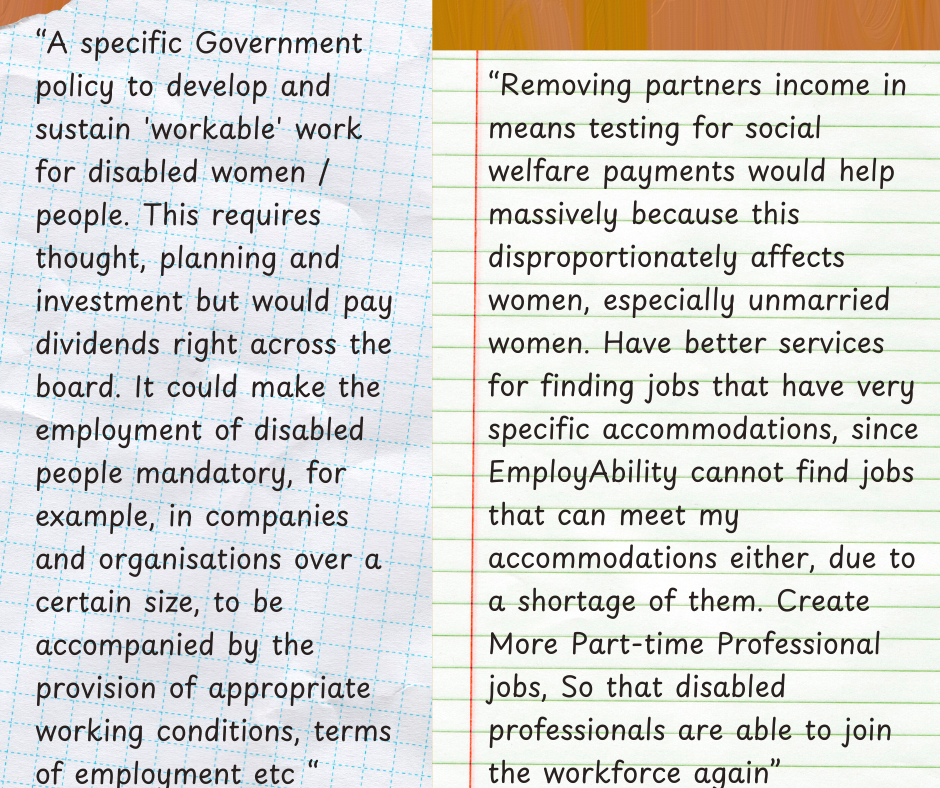
A graphic with a brush-stroke background in layered ochre, orange and brown tones. Two long, lined paper panels are placed side-by-side, resembling written notes.
Text reads:
“A specific Government policy to develop and sustain ‘workable’ work for disabled women / people. This requires thought, planning and investment but would pay dividends right across the board. It could make the employment of disabled people mandatory, for example, in companies and organisations over a certain size, to be accompanied by the provision of appropriate working conditions, terms of employment etc.”
“Removing partners income in means testing for social welfare payments would help massively because this disproportionately affects women, especially unmarried women. Have better services for finding jobs that have very specific accommodations, since EmployAbility cannot find jobs that can meet my accommodations either, due to a shortage of them. Create more part-time professional jobs, so that disabled professionals are able to join the workforce again”